Human perception can be composed.
ANIMA MUNDI
Opening Manifesto
Every important decision is made twice. Once in the state of mind that perceives the situation. Once in the action that follows. We spend our lives refining the second and almost no time on the first.
This is a mistake of civilizational scale.
We have built a world that rewards speed of response and starves depth of perception. We have more information than any generation before us, and less stillness in which to understand it. We have mistaken accumulation for clarity.
But clarity is not accumulated. It emerges. It emerges the way a lake becomes a mirror: not by adding anything, but by allowing the surface to settle.
Perception precedes every decision.
Coherence precedes perception.
Rhythm precedes coherence.
Sound is organized vibration. Breath is the doorway into that vibration. This is the entire foundation, and it is enough to build a life's work upon.
Anima Mundi is not about music. It is about the conditions from which clarity naturally arises, and about the ancient, precise, physical means by which those conditions can be cultivated.
What follows is not a promise. It is a philosophy.
I
There is a quality of mind from which good decisions come. Everyone who has carried real responsibility knows it, though few can name it. It is not intelligence. It is not information. It is not effort.
It is coherence: the state in which attention, body, and perception move together rather than against each other.
Most of modern life is an unintentional training program in its opposite. Fragmented attention is not a personal failing; it is the predictable result of an environment engineered for interruption. The mind adapts to what it is given. Given noise, it becomes noisy.
The question, then, is not how to think harder. Some problems do not yield to more thinking. They yield only to a different state, the way a knot yields not to force but to the right angle of approach.
The work of Anima Mundi is the deliberate cultivation of that state. Not as escape from the world, but as preparation for meeting it. The objective is never to leave reality behind. The objective is to perceive it more completely.
Everything returns to perception.
II
We assume we see the world as it is. We see the world as we are.
A fragmented mind perceives a fragmented situation. It sees pieces, urgencies, threats. A coherent mind, presented with the same facts, perceives structure: the relationships between things, the shape of the whole, the option that was invisible a moment before.
This is not mysticism. It is the ordinary experience of anyone who has returned to a difficult problem after a long walk and found it changed. The problem did not change. The instrument of perception did.
We tune our instruments before we play them. We rarely think to tune the instrument through which we perceive everything.
Perception is not passive reception. It is an act, and like every act, its quality depends on the state of the one performing it. A great photographer and a hurried tourist stand before the same landscape. Only one of them sees it.
The difference is not in the eyes. It is in the stillness behind them.
III
Sound is the oldest technology of state.
Before writing, before agriculture, before the wheel, human beings gathered around rhythm. Every culture on earth, without exception, discovered independently that organized vibration changes the condition of those who receive it. This is not coincidence. It is physiology.
Sound is not a metaphor for vibration. Sound is vibration: pressure moving through air, through bone, through the fluid of the inner ear, into the nervous system itself. It does not ask permission of the intellect. It arrives beneath the level of opinion.
This is why music can change a room before a single word is spoken. It is why a certain interval can loosen grief that years of language could not reach. Sound bypasses the part of us that argues and speaks directly to the part of us that is.
And silence. Silence is not the absence of sound. It is the condition in which sound becomes meaningful. The rest in a phrase of music is not empty; it is where the previous note completes itself and the next becomes possible. A culture that has lost silence has not lost quiet. It has lost meaning's natural habitat.
To work seriously with sound is to work with the architecture of attention itself.
IV
Breath occupies a singular position in human physiology: it is the only vital process that is both fully automatic and fully trainable.
The heart beats without consent. Digestion proceeds without instruction. But breath stands at the threshold: it will continue on its own forever, and yet at any moment it can be taken up consciously, shaped, slowed, deepened.
This makes breath a doorway. On one side, the involuntary systems that govern our state: heart rate, nervous tension, the chemistry of alertness and calm. On the other side, conscious intention. Breath is the one corridor that connects them.
And sound is breath made audible.
Every sung note, every played phrase on a wind instrument, is breath given form, vibration organized by the body itself. When a person works with breath and sound together, they are not performing an exercise. They are operating the most direct interface between intention and nervous system that human beings possess.
Nothing needs to be believed for this to be true. It is simply how we are built.
The practice, then, is architectural. One does not force a state of coherence any more than an architect forces light into a building. One shapes the proportions, the openings, the rhythm of the structure, and the light enters on its own.
V
Everything that lives, moves rhythmically.
The heartbeat. The breath. The tides. The seasons. The alternation of waking and sleep, of effort and rest, of speech and pause. Attention itself moves in waves, gathering, cresting, releasing. Creation follows the same law: tension and resolution, inhale and exhale, one note and the next.
The universe is built on recurring structures. Patterns repeat across scales: in the branching of rivers and lungs, in the spiral of galaxies and shells, in the oscillations of atoms and orchestras. Music does not invent these patterns.
Music allows us to hear them.
This is why rhythm is not decoration. Rhythm is the underlying grammar of coherence. When the systems of the body fall into phase with one another, breath with heartbeat, attention with breath, something measurable and something unmistakable occurs. The noise floor of the mind drops. Perception widens. What was scattered becomes gathered.
And transformation, when it comes, does not arrive in the tension or in the release. It arrives in the space between them. Between the inhale and the exhale. Between the movement and the stillness. Between one note and the next, in that unweighable interval where the previous state has ended and the new one has not yet begun.
That invisible space is where perception changes. All serious practice is a way of learning to inhabit it.
VI
There is a kind of person whose arrival changes the mathematics of a room.
Most presences narrow possibility. They arrive carrying an agenda, and the room organizes itself around it. Options close. Conversations converge. Everyone becomes slightly smaller and slightly more careful.
A rarer kind of presence does the opposite. Around it, the number of futures people can imagine for themselves begins to grow. Ideas that seemed settled reopen. Paths that were invisible a moment earlier become thinkable. Nothing has been said, and yet everything feels newly possible.
Physics has a measure for how many states a system can hold: entropy. By that measure, this is a high-entropy presence. Not disorder. Abundance of possibility.
This is not charisma. Charisma pulls attention inward, toward the one who holds it. This moves in the other direction. People are not drawn to such a person because of appearance, or voice, or authority. They are drawn because, standing nearby, their own lives become larger.
This is what coherence looks like from the outside. A coherent mind does not only perceive more completely. It quietly permits everyone around it to do the same.
The state can be cultivated. And the state changes the room.
VII
Some vocations are chosen. Others are recognized slowly, over decades, the way one recognizes a landscape one has been walking through all along.
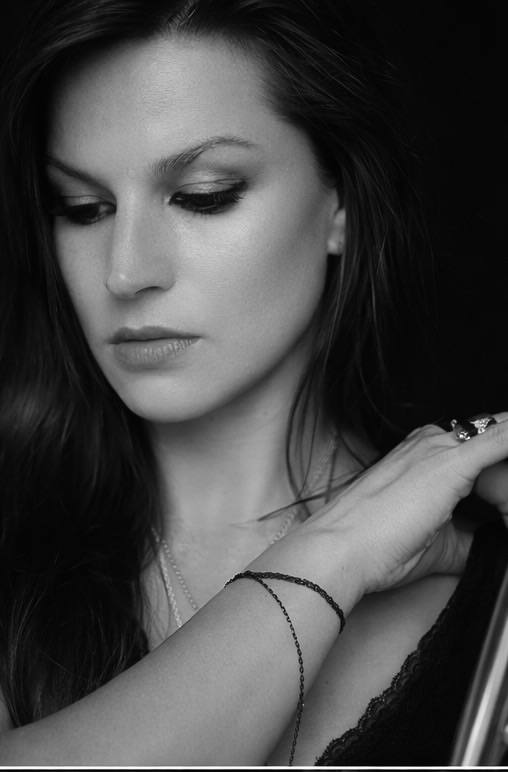
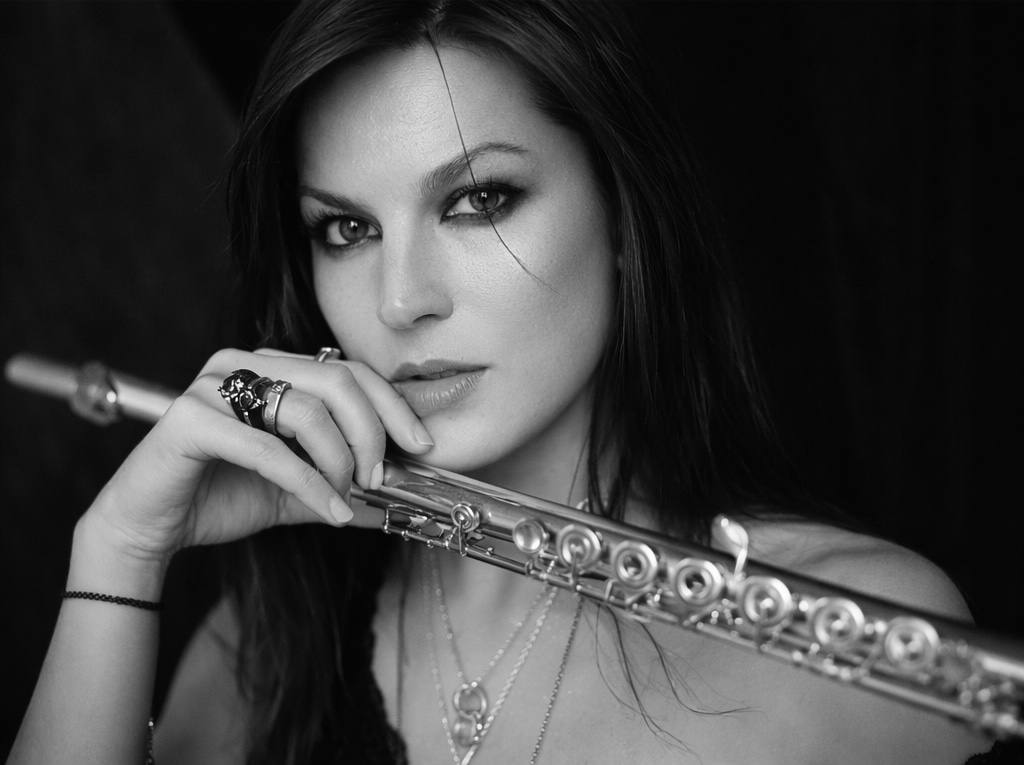
Anetta Morozova's life in sound began before she was three years old, before memory had fully formed, so that music was never something she acquired. It was the medium she grew up inside, the way others grow up inside a language.
The formal training came: deep classical education, then jazz, the two great disciplines of Western sound: one teaching reverence for structure, the other teaching freedom within it. She became a composer, a singer, a multi-instrumentalist, a multimedia artist, not by collecting skills, but by following a single question through every form it offered: what is sound actually doing to the one who hears it?
That question eventually led her beyond the existing instruments.
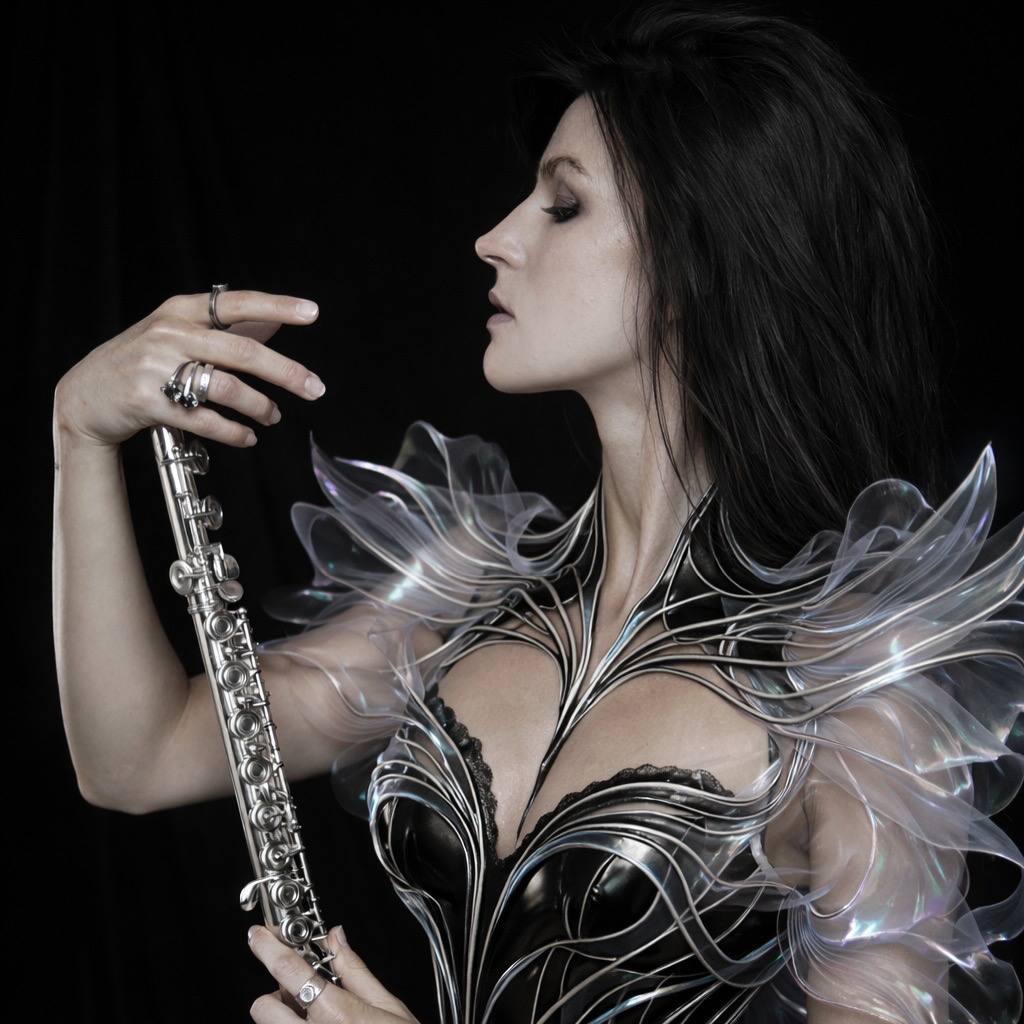
In 2018 she officially registered the Vertical Flute technique: her own invention, a new way of holding and voicing the instrument that opened sonic territory no one had mapped. It became her unmistakable signature: not a novelty, but the natural consequence of someone who had listened long enough to hear what was missing. Alongside it, she expanded the artistic use of multiphonic and overtone singing: the art of producing several tones from a single breath, of revealing the hidden harmonic architecture that lives inside every note.
Consider what these techniques have in common. Both take one stream of breath and disclose the multiplicity within it. Both prove, audibly, that a single source contains more than one voice.
Her work drew recognition from musicians whose ears the world already trusted: Vangelis, Narada Michael Walden, Susan Rogers, Robot Koch, Frederick Rousseau, Sean Slade, Madame Gandhi, CJ Vanston, Urs Wiesendanger, Neff-U, among others. But recognition was never the destination. It was confirmation of something she had suspected since childhood:
Sound is not entertainment. Sound is a way of knowing.
The performances, the compositions, the invented techniques: these were the research. The philosophy is what the research revealed.
VIII
Anima mundi: the soul of the world. The old philosophers used the phrase to name their intuition that the world is not a collection of dead parts but a single living coherence, animated throughout.
Whether one takes that literally or as the most durable metaphor in Western thought, the observation beneath it stands: everything vibrates, everything moves in rhythm, and the same patterns recur from the smallest scale to the largest. We are not observers of this order. We are instances of it.
Anima Mundi, the practice, was born when the two halves of a life finally recognized each other: decades of artistic research into what sound does, and a growing understanding of what the people around her most lacked.
She had spent years in rooms with accomplished people, brilliant and driven and responsible for consequential decisions, and watched the same quiet crisis repeat. Not a crisis of intelligence. A crisis of state. Minds of extraordinary capacity running on fractured attention, making the most important judgments of their lives from the least coherent condition of their day.
Anima Mundi exists to offer what no briefing, no framework, no additional information can provide: a different state to perceive from.
It is not a wellness project. It is not meditation as commonly packaged. It is not therapy, and it is not entertainment. It is a private artistic practice, an ongoing research into coherence through breath, rhythm, vibration, and deep listening, conducted with the seriousness of a laboratory and the sensibility of an artist.
IX
This work is for people who carry the weight of decisions that matter.
Founders who know that one clear judgment is worth a thousand hours of scattered effort. Investors whose entire discipline is perception: seeing what is actually there rather than what the noise suggests. Executives responsible for other people's livelihoods. Artists and architects who understand that the quality of the work can never exceed the quality of the attention that made it. Scientists who have noticed that insight rarely arrives on command, but reliably arrives in a certain state.
What these people share is not a profession. It is a relationship to consequence.
They have usually tried the ordinary remedies. More information. Better systems. Harder thinking. And they have discovered the limit of those tools: that beyond a certain point, the bottleneck is not what they know but the state from which they perceive what they know.
This work does not promise healing. It does not promise transformation. Promises of that kind belong to the marketplace, and this is not the marketplace.
It offers an invitation instead: to explore, with rigor and without mysticism, the oldest and most direct means humans possess for changing the condition of their own perception. To listen more deeply than the modern world permits. To discover what becomes visible from coherence that was invisible from noise.
Those who need to be convinced are not being addressed. Those who recognize the problem already understand.
X
The practice is private by nature, not by exclusivity.
Coherence cannot be mass-produced. It requires a space designed for one purpose, a duration protected from interruption, and a form of attention that dissolves in crowds. What can be broadcast is information. What must be encountered in person is state.
Each engagement is composed rather than delivered, built from breath, rhythm, live sound, vibration, and structured silence, shaped to the person or the small room receiving it. No two are identical, because no two states of arrival are identical. This is what distinguishes a practice from a product.
The work asks nothing to be believed and nothing to be performed. It asks only presence: the willingness to remain in the space between tension and release long enough for perception to reorganize itself.
What happens there is not dramatic. It is quieter than that, and more durable. The surface settles. The instrument tunes. And the person returns to their decisions as a different observer.
By Introduction Only
There is no public channel, and no address to write to. Engagements begin the old way: with an introduction, made in person, by someone already close to the work. Sessions, residencies, and commissioned works are undertaken selectively.
XI
The philosophy stands on its own. But the artistic research behind it has been recognized by musicians and producers whose judgment shaped the sound of our era:
Their recognition is noted here for a single reason: serious work with sound deserves to be verified by serious ears. It has been.
The Vertical Flute technique, invented by Anetta Morozova, was officially registered in 2018 and remains her unmistakable signature, a reminder that the instruments we inherit are not the boundary of what can be heard.
Closing Manifesto
A civilization is remembered for its cathedrals: the structures it built not for the season, but for the centuries.
Cathedrals were never merely buildings. They were instruments. Every proportion was tuned; every stone placed in relation to sound and light; every vault shaped so that a single voice could fill the whole and a crowd could fall silent inside it. The architects understood something we have nearly forgotten: that space, sound, and stillness can be composed deliberately, and that human perception changes inside such composition.
Anima Mundi is built on that understanding, carried into a different century.
It is a philosophy in what it holds. A practice in what it does. And, in time, a discipline in what it teaches.
The materials are older than stone: breath, rhythm, vibration, silence. The blueprint is a single idea, patient enough to hold everything else: that the quality of every important decision depends on the state of mind from which we perceive, and that this state can be cultivated as deliberately as any craft.
Perception precedes every decision.
Coherence precedes perception.
Rhythm precedes coherence.
And breath, ordinary, constant, waiting, is the doorway.
Nothing is random. Everything is composed.
This is not a brand. Brands are built for markets and dissolve with them. This is a foundation, laid so that the work can continue to rise for decades, stone by stone, note by note, breath by breath.
The noise of the world will continue. That is not the concern of this work.
Its concern is the surface of the lake.
And the moment it settles.